A bathroom cabinet can look roomy until you try to fit a drawer beside the drainpipe. Supply valves occupy the back corners, door hinges narrow the opening, and tall bottles need more headroom than a shelf allows. The best under-sink organizer for a small bathroom fits these obstacles while keeping everyday items easy to reach.
Start with the usable space around the plumbing, then choose a layout. A narrow pull-out drawer may suit one side of the cabinet; an adjustable shelf may work better across it. Sometimes two small, removable bins make more sense than a frame that fills the entire cupboard.
Measure the cabinet before choosing an organizer
Empty the cabinet and measure its interior, rather than relying on the vanity's outside dimensions. Record the following measurements and keep a simple sketch nearby while comparing options.
- Clear opening width: Measure between the hinges or other obstructions. An organizer that fits inside the cabinet may still be too wide to pass through its doorway.
- Usable depth: Measure from the back wall to the inside of the closed door. Account for door hardware, projecting plumbing, and anything mounted inside the door.
- Available height: Measure from the cabinet floor to the lowest obstruction above each proposed storage area. The sink bowl may leave different heights on either side.
- Plumbing footprint: Note where the drain, trap, supply lines, and shutoff valves sit. Measure their distance from the floor and side walls.
- Drawer travel: Check the space in front of the vanity. A drawer needs room to extend without hitting a door, toilet, or another fixture.
Measure each side separately: plumbing is not always centered. Also check whether an organizer must be assembled inside the cupboard. A complete frame might not pass through the opening even when its listed dimensions fit the interior.
Map the plumbing clearance
Use cardboard to represent an organizer's footprint. Place it where the base would sit, then use an upright piece to check shelf height. This helps reveal collisions that a width measurement alone misses.
Leave space to reach shutoff valves and remove storage for plumbing work. Avoid a tight arrangement that presses against hoses or depends on a pipe to hold it steady. For a pull-out design, check the moving drawer and its contents throughout their travel, not just the stationary frame.
Which organizer style fits your bathroom?
| Style | Best suited to | Main tradeoff |
|---|---|---|
| Pull-out drawers | A clear strip beside plumbing, especially in a deep cabinet | Tracks and frames consume storage space and require an unobstructed path |
| Stackable shelves | Open sections where smaller items leave unused height | Fixed shelf spacing can restrict tall bottles and access below |
| Adjustable organizers | Cabinets with awkward drainpipe positions | Supports and movable sections still need careful clearance checks |
| Removable bins | Very small cupboards or irregular spaces | Rear bins may require moving front items |
Pull-out drawers: best for reaching into deep cabinets
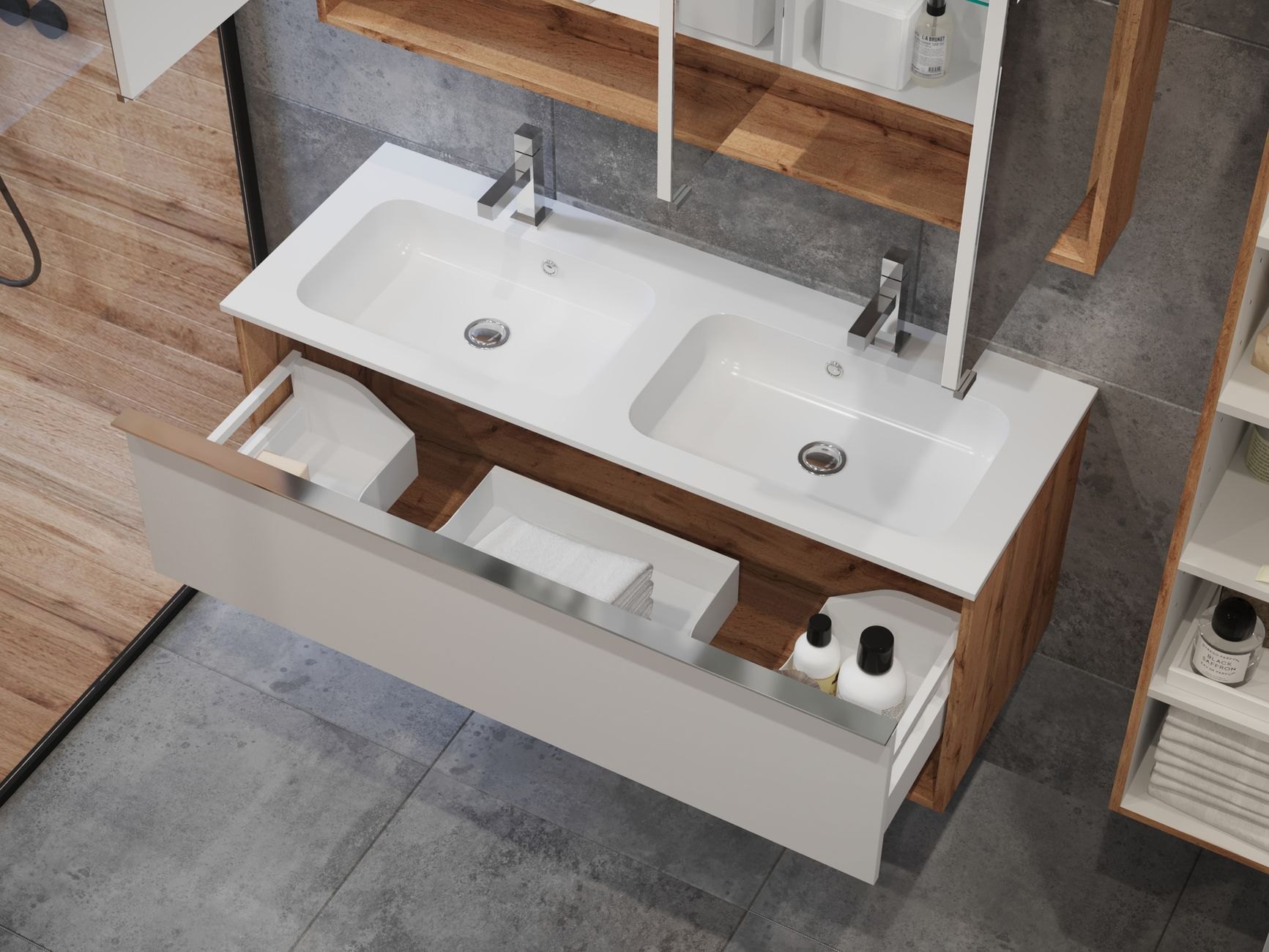
A pull-out drawer brings supplies toward you, reducing the need to reach behind bottles. It is a useful choice when you have a clear, uninterrupted strip of floor beside the drainpipe. A narrow unit on one side can leave the other side available for taller products.
Check the drawer's usable interior dimensions as well as the organizer's overall size. Frames, handles, and slides take up room. A two-tier model may fit the cabinet but leave too little clearance for a pump bottle on its lower level.
- Look for a removable tray or basket that you can wash separately.
- Check whether the drawer extends far enough to reach items at the back.
- Read the mounting requirements; some designs need screws or adhesive attachments.
- Check load limits for each tier, including any instructions about securing the frame.
The main compromise is stability. Extending a drawer moves its contents forward, so follow the manufacturer's installation instructions rather than assuming a freestanding unit will work. If you cannot use the required mounting method, choose a different design.
Stackable shelves: best for using spare height
Stackable shelves work well where plumbing leaves a reasonably open section of cabinet. They can separate short toiletries, spare soap, and small supply bins into two accessible levels. They are less useful when most of your products are tall bottles.
Check the opening beneath each shelf, including the height lost to its structure. A bottle needs enough room to lift out comfortably, not merely stand upright. Shelf legs also reduce usable floor area, which matters in a narrow cupboard.
Choose units designed to stack together and follow their stacking limits. Unrelated shelves balanced on one another can shift when you remove an item. Keep heavier supplies low and make sure every foot rests fully on the cabinet floor or supporting surface.
A shelf that lifts out easily is helpful for cleaning. Several small shelves may be easier to remove around plumbing than one broad frame, though they introduce more legs and edges to work around.
Adjustable organizers: best for awkward pipe layouts
Adjustable organizers can change width, shelf height, or the position of individual shelf sections. These features can help when a drainpipe interrupts the space where a conventional shelf would sit.
Look closely at what actually adjusts. An expandable frame may change width while retaining a fixed depth. Removable shelf panels may create a pipe opening, but crossbars or supports can still collide with the trap. Product photos alone may not show those restrictions clearly.
For example, if your drain sits toward the left, an adjustable design might provide a taller storage area on the right and a smaller shelf beside the pipe. Compare that arrangement with a simple narrow drawer: extra adjustability is worthwhile only when it creates accessible storage.
Prefer a layout you can dismantle or lift out without disturbing plumbing. Also consider the joints and overlapping pieces you will need to wipe after a spill.
Choose surfaces that are easy to clean
Under-sink storage should be easy to empty, wipe, and dry. A removable solid-bottom tray can contain small product drips, while an open basket lets you see through to the cabinet floor. Neither replaces checking the cupboard for leaks.
- Plastic trays: Look for smooth interiors and rounded corners. Deep ribs, hollow handles, and narrow seams add places to clean.
- Coated metal: Check the stated care instructions and inspect the finish. Wire shelves may need a removable liner to support small bottles.
- Wood-based shelves: Check whether the product is intended for bathroom use and how its edges and underside should be cared for.
- Fabric bins: Check washing and drying instructions, especially if storing products that might drip.
A shallow removable tray beneath stored bottles can make cleanup simpler, provided it does not interfere with the organizer's feet or tracks. Choose one you can lift out without tipping its contents.
If you find water, remove the stored items and address its source before reorganizing. Let the cabinet and organizer dry fully before putting supplies back.
Build a layout around your everyday supplies
Sort the contents before deciding how much storage to buy. Keep frequently used products near the front, place refills farther back, and group small items in a removable bin. Store products upright in their original containers and follow their storage instructions.
In a narrow vanity, a practical arrangement might be one pull-out drawer beside the pipe, with tall bottles in a removable tray on the other side. In a wider cupboard with limited height, two shallow bins may be more accessible than a two-tier organizer.
Leave enough room to grasp bottles and lift bins. Storage that requires unpacking half the cabinet to retrieve one item is unlikely to stay convenient.
A final fit check before buying
Choose the organizer that passes these checks:
- It fits through the opening and sits clear of hinges and plumbing.
- Its shelves accommodate your actual bottles and bins.
- Drawers extend without hitting nearby fixtures.
- You can meet its mounting and load requirements.
- Valves remain reachable, and the organizer can be removed for access.
- Trays and surfaces are manageable to clean and dry.
For a deep cabinet with clear space beside the pipe, start by comparing narrow pull-out drawers. For unused vertical space, consider stackable shelves. For an awkward drain position, examine adjustable designs carefully. If every frame feels cramped, use a few removable bins and keep the plumbing accessible.